


Understanding Full Stack Development
Full stack development refers to the comprehensive skill set required to manage both the front-end and back-end aspects of web development. As the technology landscape evolves, the demand for professionals who can create a complete web application—from concept to deployment—has significantly increased. Full stack developers possess the expertise needed to navigate various layers of the software development process, enabling them to work effectively across multiple technologies and frameworks.
The front-end, often referred to as the client-side, involves everything users interact with directly, including design, layout, and user experience. A proficient full stack developer must have a strong grasp of HTML, CSS, and JavaScript, along with experience using libraries and frameworks like React or Angular. On the other hand, the back-end—or server-side—focuses on the application’s logic, database interactions, and server configuration. Familiarity with programming languages such as Python, Ruby, or Java, along with database management systems like MySQL or MongoDB, is crucial for this role.
One of the significant advantages of being a full stack developer is their versatility. These professionals can adapt to varying project requirements and technical environments, providing value in a wide range of contexts—from startups aiming for rapid product development to established enterprises requiring sophisticated web solutions. Such adaptability stems from their understanding of the complete software stack, allowing them to troubleshoot and manage all aspects of development efficiently.
The role of a full stack developer is not limited to technical skills; it also involves managing project lifecycles, collaborating with cross-functional teams, and engaging in effective communication with stakeholders. This holistic approach not only enhances their employability but also contributes to the overall success of projects, ensuring that both user needs and business objectives are met effectively.
Essential Skills and Technologies
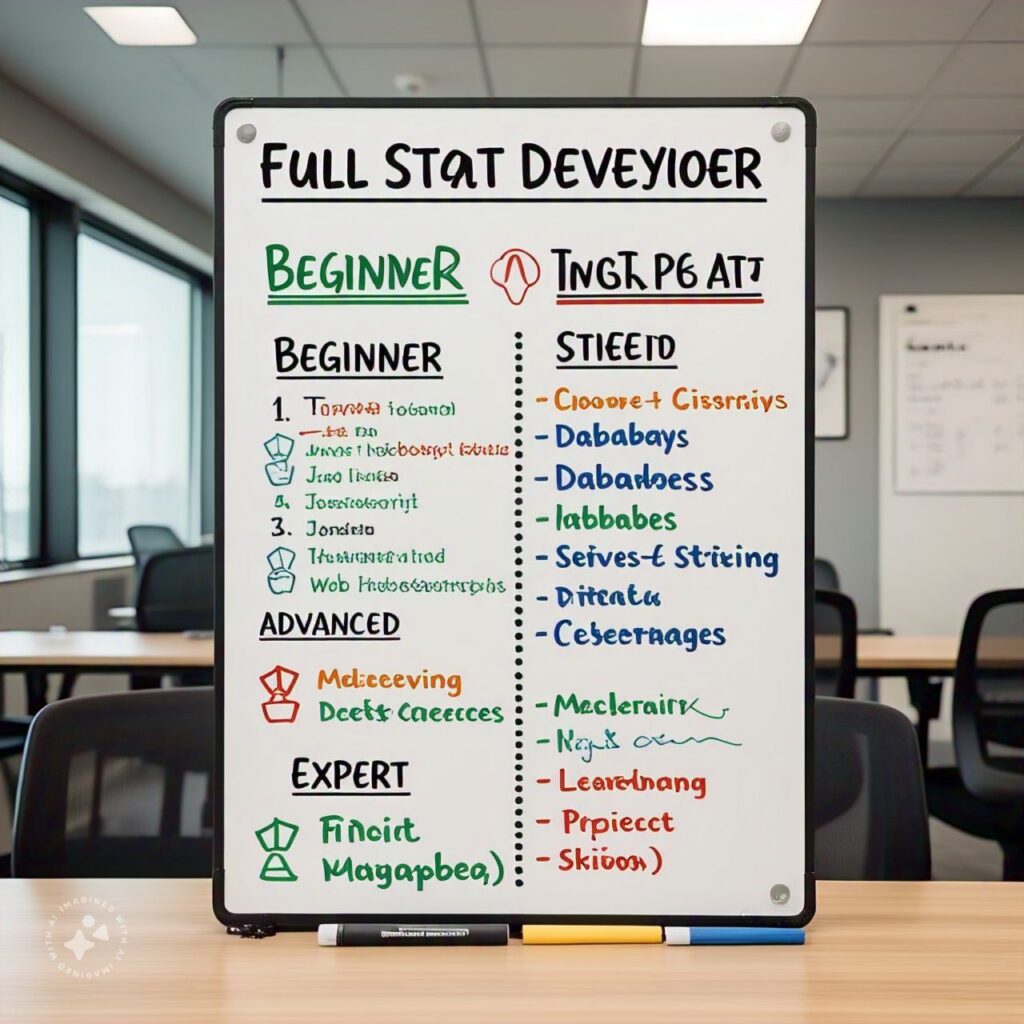
Becoming a successful full stack developer requires a diverse set of skills and proficiency in various technologies. To embark on this roadmap effectively, it’s crucial to start with front-end technologies that form the user interface of web applications. The foundational languages are HTML, CSS, and JavaScript. HTML serves as the backbone, providing the basic structure of web pages. CSS is essential for styling and layout, allowing developers to create visually appealing and responsive designs. JavaScript adds interactivity, enabling developers to implement dynamic features that enhance user experience.
In addition to these core languages, aspiring full stack developers should familiarize themselves with popular front-end frameworks. Tools such as React, Angular, and Vue.js can significantly streamline the development process by offering reusable components and efficient state management. Mastering these frameworks not only improves productivity but also elevates the overall quality of web applications.
On the back-end, proficiency in server-side programming languages is paramount. Languages such as Python, Node.js, and Ruby are widely used among full stack developers. Python, with its simplicity and readability, is favored for its extensive libraries and frameworks like Django and Flask. Node.js allows developers to use JavaScript on the server side, creating a harmonious environment between front-end and back-end development. Ruby, particularly through the Ruby on Rails framework, is known for its convention over configuration approach, enabling rapid application development.
Additionally, understanding databases is critical in any full stack developer’s toolkit. Familiarizing oneself with relational databases such as MySQL, as well as NoSQL databases like MongoDB, is important for managing and utilizing data efficiently. Knowledge of tools like Git for version control, and deployment platforms such as Heroku or AWS, further enhances a developer’s skill set. By mastering these essential skills and technologies, aspiring full stack developers will be well-prepared to navigate the complexities of modern web development.
Building a Portfolio and Gaining Experience
Developing a strong portfolio is crucial for aspiring full stack developers as it showcases your skills, projects, and experience to potential employers. A well-structured portfolio allows you to demonstrate not only your technical abilities but also your creativity and problem-solving skills. One of the most effective ways to build this portfolio is through personal projects. These projects give you the freedom to explore technologies and frameworks that interest you, allowing your unique skills to shine.
Additionally, contributing to open-source projects is another excellent method for gaining practical experience. Open-source platforms, such as GitHub, allow developers to collaborate on various projects, improving your coding skills while working alongside experienced developers. Engaging in these communities can also provide valuable networking opportunities, which can lead to job prospects and mentorship. It is recommended to look for projects that align with your interests and skillset to ensure a more fulfilling experience.
Participating in hackathons is another effective way to gain experience as a full stack developer. These events challenge developers to create a project within a set timeframe, often resulting in innovative solutions to real-world problems. Hackathons not only foster teamwork and collaboration but also enhance your ability to think on your feet. Engaging in such activities will further enrich your portfolio, providing evidence of your capabilities in a competitive environment.
Finally, showcasing your work online is essential to make an impact. Both GitHub and personal websites serve as platforms to display your projects, share your thoughts on full stack development, and document your learning journey. Include clear descriptions of your projects, technologies used, and your role in each project. By following these actionable steps, you can create an impressive portfolio that highlights your journey as a full stack developer, significantly increasing your chances of drawing the attention of potential employers.
Navigating your Career Path
Embarking on a journey as a full stack developer opens up a myriad of career paths. Initially, many individuals may find themselves in entry-level positions such as junior web developer or software engineer. These roles typically involve assisting more experienced developers in building and maintaining applications while acquiring hands-on experience. As competencies evolve, opportunities for advancement arise, and one may transition into roles such as a senior full stack developer or technical lead.
Growth in this field is not just limited to job titles; it encompasses the breadth of skills that a developer possesses. With a solid understanding of both front-end and back-end technologies, a full stack developer can easily pivot into specialized areas such as DevOps, mobile development, or cloud computing. Continuous learning is paramount in this dynamic landscape, where technologies and methodologies rapidly evolve. Engaging in ongoing education through online courses, certifications, and attending industry conferences can provide a competitive advantage.
Networking within the tech community is equally significant for career progression. Establishing connections through local meetups, online forums, and professional organizations can lead to new opportunities. By building relationships with fellow developers, recruiters, and industry leaders, one can stay informed about trends and job openings. Furthermore, participating in hackathons or contributing to open-source projects can enhance visibility and showcase your capabilities.
Lastly, as a full stack developer, one must consider the distinctions between freelancing and full-time employment. Freelancing offers flexibility and the potential for diverse projects, while full-time employment provides stability and access to benefits such as health insurance and retirement plans. Understanding the pros and cons of each path is essential in making informed career decisions as one navigates their roadmap to success in the tech industry.
Phone Number: +91-7488456170
Email ID: abhishek@eepl.me
Our Platforms:
Digilearn Cloud
EEPL Test
Live Emancipation
Follow Us on Social Media:
Instagram – EEPL Classroom
Facebook – EEPL Classroom
Stay connected and keep learning with EEPL Classroom!