

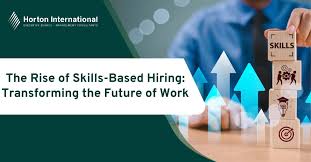
The job market is evolving at a speed never seen before. Traditional career paths that once depended heavily on degrees, job titles, and years of experience are gradually being replaced by a more dynamic, skill-driven model. Today, employers are not just asking “What did you study?” — they are asking “What can you actually do?”
We are moving toward a skill-based economy, where practical abilities matter more than certificates. This shift is being driven by rapid technological advancement, automation, and global competition. Industries no longer have the luxury of spending months training employees from scratch. They need individuals who can contribute value from day one.
Degrees Are No Longer the Only Measure
In the past, a degree from a recognized institution was often enough to secure a stable career. While education still plays an important role, it is no longer the only deciding factor. Many companies now prioritize hands-on experience, technical capabilities, and problem-solving ability over academic credentials alone.
A person who can build solutions, manage systems, analyze data, or communicate effectively often stands out more than someone with only theoretical knowledge. The focus has shifted from qualification-based hiring to capability-based hiring.
What Employers Really Look For Today
Modern organizations seek professionals who bring practical, applicable skills to the workplace. Some of the most in-demand abilities include:
- Problem-solving and critical thinking
- Communication and collaboration
- Technical and digital skills
- Adaptability and learning ability
- Creativity and innovation
These skills allow employees to adjust quickly to new tools, systems, and market demands. In a world where change is constant, adaptability itself has become one of the most valuable professional traits.
This Shift Is Happening Across All Industries
The move toward skill-based careers is not limited to the IT sector. It is visible in almost every field:
- Marketing now demands digital tools, analytics, and content creation skills
- Healthcare increasingly relies on technology and specialized technical expertise
- Finance requires data analysis and fintech knowledge
- Design depends on software proficiency and creative execution
- Education now includes digital teaching methods and tech integration
No matter the industry, practical competence is becoming the common requirement.
The Workforce of the Future
The future workforce will be defined less by degrees hanging on walls and more by the ability to demonstrate real-world competence. Portfolios, projects, certifications, and hands-on experience are becoming powerful proof of capability.
This does not mean education is unimportant — it means education must be supported by skills. Learning must go beyond textbooks and classrooms into practice, experimentation, and continuous improvement.
Final Thoughts
The message is clear: skills are the new currency of careers. Those who focus on building practical abilities, staying adaptable, and continuously learning will have stronger career security and better growth opportunities.
In the coming years, what you can do will speak louder than what you have studied. The professionals who succeed will be those who invest in skills that create real value in the workplace.
For More Information and Updates, Connect With Us
- Name: Abhishek Kumar
- Phone Number: +91-7488456170
- Email ID: teamemancipation@gmail.com
- Our Platforms:
- Digilearn Cloud
- EEPL Test
- Live Emancipation
- Follow Us on Social Media:
- Instagram – EEPL Classroom
- Facebook – EEPL Classroom